
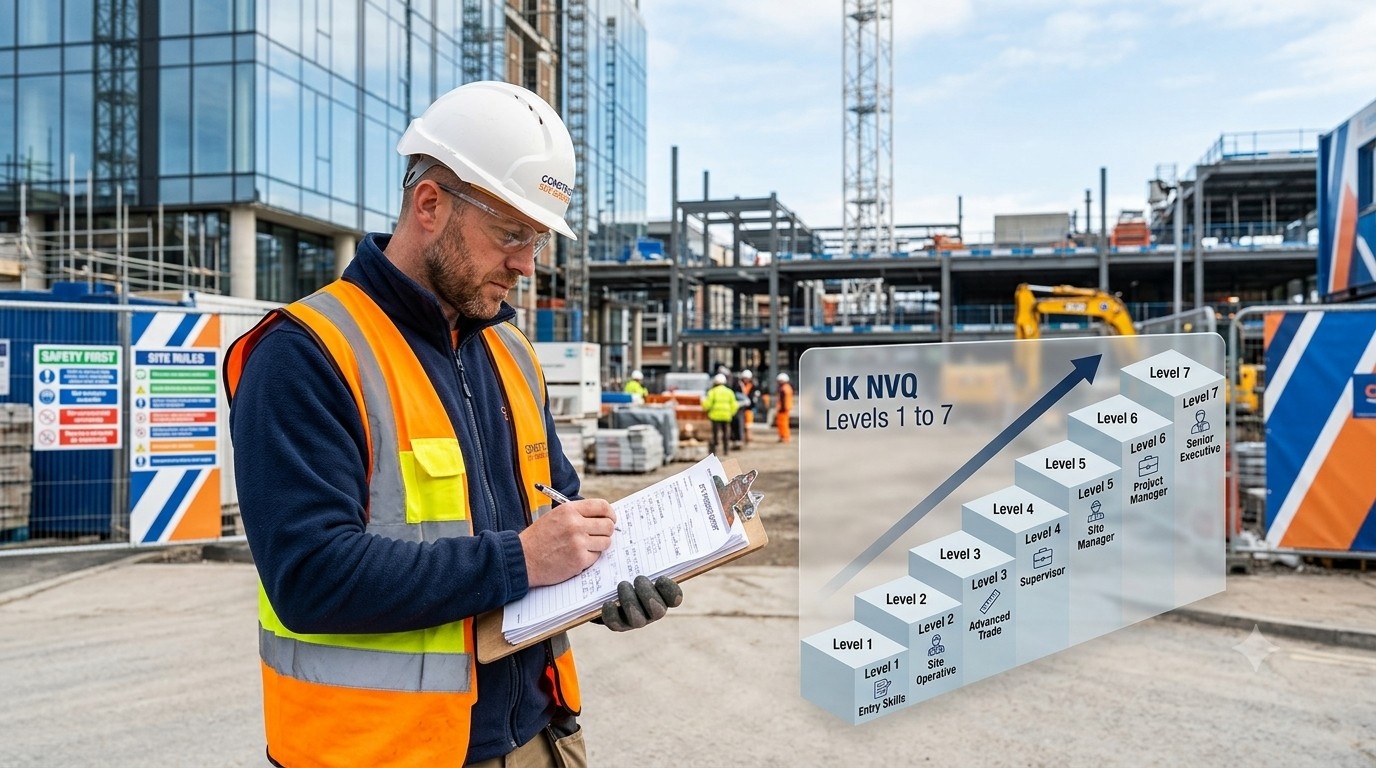
Choosing the right NVQ level can feel confusing, especially if you’re starting your career or looking to progress in your current role. With qualifications ranging from Level 2 to Level 7, it’s important to understand what each level represents and which one best suits your experience, skills, and career goals.
In this guide, we’ll explain the different NVQ levels, who they’re designed for, and how to decide which qualification is right for you.
If you’re new to vocational qualifications, you may also be wondering whether you can get an NVQ without going to college. Understanding how NVQs work can help you choose the right qualification with confidence.
What Is an NVQ?
A National Vocational Qualification (NVQ) is a work-based qualification that demonstrates your ability to perform a specific job to industry standards. Unlike classroom-based courses, NVQs assess your practical skills and knowledge in a real working environment.
They’re available across various industries, including construction, health and social care, business administration, and engineering.
Understanding NVQ Levels
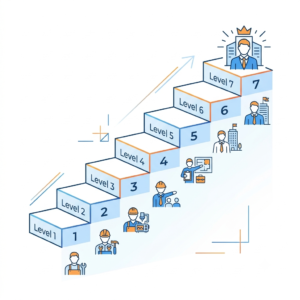
Each NVQ level reflects the complexity of the job role and the level of responsibility involved. Here’s a simple breakdown.
| NVQ Level | Equivalent Qualification | Suitable For |
|---|---|---|
| Level 2 | GCSE Grades 9-4 (A*-C) | Operatives and skilled workers |
| Level 3 | A Level | Experienced workers and supervisors |
| Level 4 | Higher National Certificate (HNC) | Team leaders and site supervisors |
| Level 5 | Higher National Diploma (HND) | Managers and senior professionals |
| Level 6 | Bachelor’s Degree | Site managers and senior management |
| Level 7 | Master’s Degree | Strategic leadership and senior executives |
Which NVQ Level Is Right for You?
The right NVQ depends on your current experience, job role, and career ambitions.
Level 1 – Starting Your Career
If you’re completely new to an industry and need to develop basic workplace skills, Level 1 is a good starting point. It’s designed for learners with little or no previous experience.
Level 2 – Skilled Workers
Level 2 is one of the most popular NVQ qualifications. It’s ideal if you’re already working in a role and want to prove your competence.
For example, construction workers, labourers, decorators, plasterers, and groundworkers often complete an NVQ Level 2 to demonstrate their practical abilities.
Level 3 – Experienced Professionals
If you’re taking on more responsibility, supervising others, or carrying out complex tasks independently, Level 3 is usually the next step.
Many experienced tradespeople choose this level to progress their careers or prepare for supervisory positions.
Level 4 and Above – Supervisors and Managers
Higher-level NVQs are aimed at professionals responsible for managing teams, projects, or business operations.
For example:
- Site Supervisors often complete NVQ Level 3 & 4.
- Site Managers commonly study NVQ Level 6.
- Senior managers and directors may progress to Level 7 qualifications.

Choosing the Right NVQ for Construction
If you work in construction, selecting the correct NVQ is particularly important because it can help you qualify for the appropriate CSCS card. Before applying, you’ll also need to pass the CITB Test, which is a key requirement for most CSCS cards.
For example:
- Labourers often work towards an NVQ Level 2.
- Skilled tradespeople usually require Level 2 or Level 3.
- Site Supervisors generally complete Level 3 & 4.
- Site Managers typically need Level 6.
If you’re unsure which qualification aligns with your job role, speaking to an approved training provider can help you make the right decision before enrolling.
Can You Progress Through NVQ Levels?
Yes. One of the biggest advantages of NVQs is that they allow you to build your qualifications over time.
Many learners begin with Level 2, gain practical experience, and later progress to Level 3, Level 4, or even Level 6 as their responsibilities increase.
Because NVQs are competence-based, progression is based on your ability to perform your role rather than simply passing written exams.
As your career develops, you may decide to move on to a higher qualification. If you’re planning your next step, you might also be wondering how long does an NVQ take? The answer depends on factors such as the qualification level, your experience, and how quickly you can complete the required assessments.
Common Mistakes When Choosing an NVQ
Selecting the wrong qualification can delay your career progression. Here are a few mistakes to avoid.
- Choosing a qualification that’s too advanced for your current role.
- Assuming everyone has to start at Level 2.
- Picking a course without checking employer or industry requirements.
- Enrolling without confirming which CSCS card or career pathway the qualification supports.
Taking a little time to choose the correct level can save both time and money later.
Frequently Asked Questions
Do I have to start at NVQ Level 1?
No. If you already have relevant workplace experience, you can often begin at a higher level that reflects your current skills.
Which NVQ level is the most common?
Level 2 and Level 3 are among the most commonly completed NVQs across many industries, particularly construction.
Can I complete an NVQ while working?
Yes. Most NVQs are designed for people who are already employed, allowing you to gain your qualification while carrying out your normal job.
Is a higher NVQ level always better?
Not necessarily. The best NVQ is the one that matches your current job role and career goals. Choosing the appropriate level is more important than selecting the highest one available.

Final Thoughts
Choosing the right NVQ level is an important investment in your career. Once you’ve completed the appropriate qualification, you may also be eligible to apply for a CSCS Card online if you work within the construction industry. Taking the correct route from the beginning can help you progress more quickly and open up better career opportunities.